
Step-by-Step Guide for Creating a Business Contingency Plan
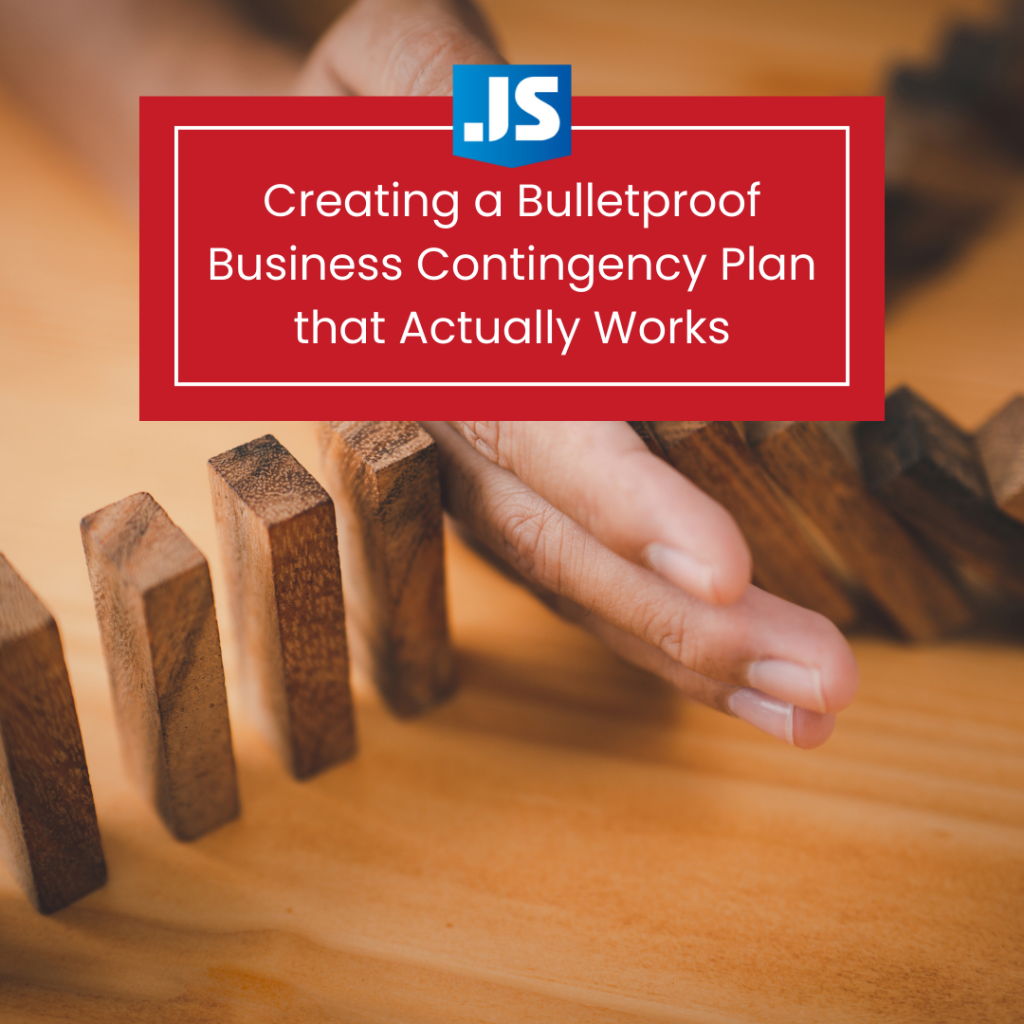
Help Your Business Prepare for the Unexpected and Ensure Business Continuity In the Event of a Disaster
In business, uncertainty is the only certainty. Whether it’s a natural disaster, data breach, or sudden disruption to business operations, having a strong contingency plan ensures you’re prepared for whatever challenging crisis might happen. Without a solid business contingency plan, your business is vulnerable to financial losses, operational downtime, and damage to your reputation.
Growing a business often feels like walking a tightrope. Every step is a balancing act between taking necessary risks to grow and protecting what you’ve already built. Everything you’ve worked for could come crashing down with one unexpected gust of wind.
And those gusts? They’re everywhere. I’ve seen businesses rocked by everything from natural disasters to economic turmoil. Just look at what we’ve faced in recent years:
- Environmental disasters that shut down entire regions
- A global pandemic (COVID) that rewrote the rules of business overnight
- Economic challenges like skyrocketing inflation and recession
- Critical employee issues – from sudden departures to serious illnesses
- Supply chain disruptions that turned reliable systems upside down
These situations have knocked even the most skilled business owners off balance. The ones who recover? They all have one thing in common – a solid contingency plan that acts as their safety net.
In this guide I will walk you through how to create a contingency plan that will protect your business continuity and keep you ahead of potential threats.
Statistics Show the Importance of Writing a Contingency Plan
Here’s what the numbers tell us about business survival and the need for having a strong plan B in place for your business:
Financial Risk:
- Failure rate for Australian businesses reached 5.1% in Nov 2024, up 57% for the year and expected to rise to 5.6% in the next 12 months. Source: Creditor’s Watch Business Risk Index
- Nearly one in five (18%) small businesses operate without any cash reserves. Almost half (46%) of business leaders have reduced their own income. And 28% of business owners have used personal funds to cover business expenses. Source: Prospa
Environmental Disaster Risk:
- FEMA (USA Federal Emergency Management Agency) reports that approximately 25% of businesses that close due to a major disaster never reopen. Source FEMA also states that 62% of business owners do not have an emergency plan in place. Source
- According to the Federal Alliance for Safe Homes, 40% of businesses do not reopen after a disaster, and another 25% close a year after the disaster. Source
Emotional & Health Risk:
- 80% of small business owners report experiencing symptoms of poor mental health at least a few times a year, including anxiety (64%), disrupted sleep (63%), and panic attacks (24%). Source: MentalHealth-UK.org
- 42% of business owners have experienced burnout in the past month, while 24% are currently experiencing it Source: Forbes
These numbers tell us one thing clearly – failing to plan is planning to fail. You know this, but you just haven’t acted on it – yet!
A Real-Life Example of a Business Contingency Plan in Action
I’ve worked with hundreds of business owners, and I’ll tell you this: the ones who survive and thrive aren’t necessarily the biggest or strongest – they’re the ones who have a safety net in place.
But here’s the challenge I see entrepreneurs face: when you’re focused on growing your business, on making payroll, on serving customers, on all the daily fires that need putting out – building that safety net feels like a luxury you can’t afford. The irony? It’s actually a necessity you can’t afford to ignore.
I work with a website designer who learned this lesson a few years ago. Let me set the stage. When she first hired me as her business consultant back in 2017, she was completely overwhelmed, overworked, and overstretched financially with:
- Financial records that were 6+ months behind
- Wildly bloated overhead eating up all her profit
- Inability to pay herself a living salary
- Half-baked operating systems and procedures
- 60-70 hour work weeks and no time plan for “what-ifs”
Then, in 2021, she seriously injured her back, and she was forced to take a break from her business and hire additional employees to support her existing client base. Thankfully, we had already implemented the Profit Oxygen Formula in her business, which included a simple but detailed contingency plan. We tapped into her emergency fund to pay for the additional labor and give her time to heal. Now, three years later, she’s celebrating her 10th anniversary in business. Her business would not have survived that setback without creating an effective contingency plan.
What Is a Contingency Plan and Why Does Every Business Need One?
A contingency plan is a proactive strategy that helps businesses prepare for and respond to negative events that could disrupt normal business operations. Think of it as a safety net that allows your business to bounce back and resume operations quickly in case of a crisis.
It’s not just another business document gathering dust in your drawer. It’s your backup parachute, your plan B (and C and D), your insurance policy against the unexpected.
Benefits of a Contingency Plan Go Way Beyond Risk Management:
- Minimises downtime and financial loss
- Ensures business continuity in emergencies
- Reduces risk impact through planned responses
- Protects company reputation by maintaining service delivery
- Reduces stress and worry for business owners
- Increases employee satisfaction by giving them a sense of security
By developing an effective contingency plan, you ensure that your business can operate smoothly, even under difficult circumstances.
Step 1: Conduct a Risk Assessment to Identify Potential Threats
Before you create a contingency plan, you need to conduct a thorough risk assessment. Identify the potential risks that could impact your business, such as:
- Natural disasters (floods, fires, earthquakes)
- Cybersecurity threats (data breach, hacking, or even a simple hard drive loss)
- Supply chain failures
- Financial downturns
- Legal and compliance issues
Ask yourself: Could your business survive if any of these events happened today? If the answer is no, it’s time to develop a contingency plan.
Step 2: Identify Critical Business Functions That Need Protection
Not all business activities are equally essential. Your contingency plan should focus on ensuring the continuity of your critical business functions. These could include:
- Customer service and communication
- IT and data management
- Supply chain and logistics
- Key financial operations
- Employee safety and HR policies
By prioritising these areas, your business can resume normal operations more quickly after a disruption.
Step 3: Define Roles and Responsibilities for Your Contingency Plan
A good contingency plan should outline roles and responsibilities so that every team member knows what to do during a crisis. Assign key responsibilities such as:
- Crisis management lead: Oversees response efforts
- IT security team: Manages cybersecurity threats and data recovery
- Operations manager: Ensures logistics and supply chain continuity
- Finance officer: Monitors financial stability and manages emergency funds
Clear accountability ensures a faster and more effective response.
Step 4: Develop a Business Continuity and Recovery Action Plan
A business continuity plan focuses on maintaining operations, while a disaster recovery plan outlines how to restore systems after a crisis. Your recovery and contingency plan might include:
- Backup plan for key data and IT infrastructure (files stored in the cloud in a separate location, generators, etc.)
- Response plan for communication with employees and customers during a crisis
- Plan template or procedures checklist to make it easy for key team members to execute the plan
- Disaster recovery plan to restore normal functions to your business
These elements ensure that your business can operate even in the face of unexpected challenges.
Step 5: Test and Review Your Contingency Plan Regularly
A contingency plan is a proactive document that should be reviewed and updated frequently. Changing business conditions mean that new risks may arise. Schedule regular tests to ensure your plan is effective, such as:
- Simulating a data breach to test cybersecurity response
- Running emergency drills for natural disasters
- Reviewing supplier agreements for alternative sourcing options
Review your plan frequently and make updates to ensure your plan remains relevant and effective.
Real-World Contingency Plan Examples
To understand how contingency plans work in practice, here are some real-world contingency plan examples:
- Supply Chain Contingency Plan: A manufacturer developed alternative supplier agreements to reduce disruptions during global shipping delays.
- Pandemic Contingency Plan: A service business switched to remote operations with cloud-based tools to continue working during lockdowns.
- Data Breach Response Plan: A company implemented cybersecurity measures to safeguard customer data and prevent future breaches.
- Financial Management Plan: A service provider created a monthly retainer package for clients and transferred a percentage of profits to an emergency fund to maintain business in case of illness or injury.
These examples show that an effective contingency plan is tailored to your business’s unique risks.
Let’s Review Key Points of Creating a Contingency Plan
- A contingency plan is a proactive strategy that ensures business continuity during a crisis.
- Risk assessment is essential to identify potential risks and plan accordingly.
- Critical business functions must be prioritised for protection.
- Roles and responsibilities should be clearly defined to enable a quick response.
- A strong contingency plan includes a business continuity plan and disaster recovery plan.
- Regularly review your contingency plan to address new challenges and risks.
Take Action Now: Protect Your Business Before It’s Too Late
Don’t have a contingency plan? You’re putting your business at risk. The best time to prepare for the unexpected is before disaster strikes.
Book a “Make it Happen” Call with me today. Together, we’ll create a comprehensive contingency plan tailored to your business needs, ensuring you can resume normal business operations no matter what comes your way.